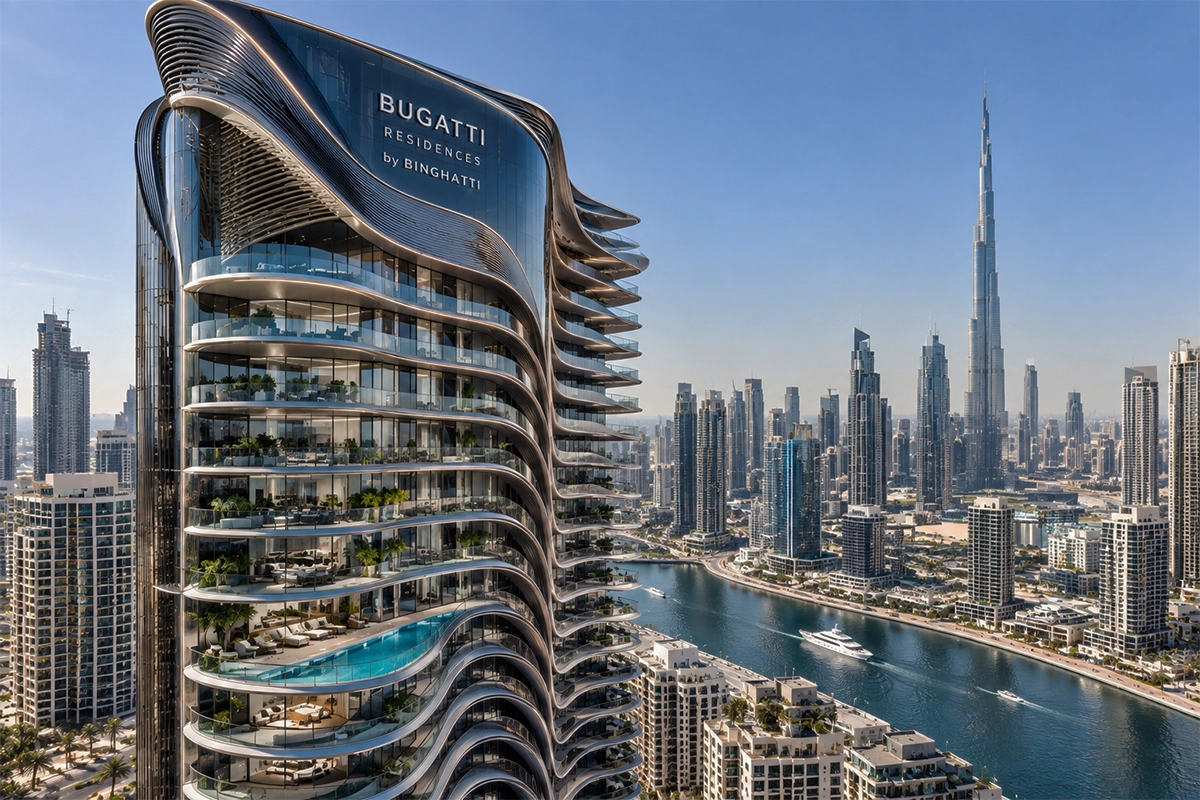

The 6-bedroom penthouse at Sobha SeaHaven in Dubai Harbour represents an ultra-prime, trophy asset targeted at high-net-worth investors seeking unhindered 360-degree views of Palm Jumeirah, Ain Dubai, and the Arabian Gulf. Source: Bayut
Property & Investment Overview Key Investment Strengths
| Developer | Sobha Realty |
|---|---|
| Location | Dubai Harbour (Waterfront between Dubai Marina & Palm Jumeirah) |
| Unit Type | Full-Floor 6-Bedroom Penthouse |
| Built-Up Area (BUA) | ~16,200 – 19,874 sq. ft. |
| Price Range | AED 105M – AED 135M ($28.5M – $36.7M USD) |
| Price per Sq. Ft. | ~AED 6,700 – 6,800/sq. ft. |
| Expected Completion | 2028 |
| Payment Plan | 80/20 (80% during construction, 20% on completion) |
- Scarcity & Waterfront Location: Dubai Harbour has script supply constraints for full-floor penthouses. Frontline views facing Palm Jumeirah and Ain Dubai command premium liquidity in the resale market.
- Sobha Construction Quality: Sobha utilizes backward-integrated manufacturing (in-house joinery, facade, and construction), which consistently yields higher build precision and fewer snagging issues than the market average.
- Layout & Exclusivity: Features private high-speed elevator access, expansive outdoor terraces, private pools, smart-home integration, and dedicated driver/maid quarters.
Risk Factors & Considerations
- Capital Intensity & Liquidity: At >AED 100M ($27M+ USD), the buyer pool is restricted to ultra-high-net-worth individuals, leading to longer selling cycles on the secondary market compared to standard units.
- Rental Yield Profile: Ultra-luxury penthouses generate lower net rental yields (typically 3%–4.5%) than smaller apartments (6%–8%), as their investment thesis relies primarily on capital appreciation rather than dividend-style yield.
- Handover Timeline: Off-plan completion slated for 2028 leaves a potential opportunity cost during construction.
Verdict
Sobha SeaHaven’s 6-bedroom penthouse ranks as a Class A+ trophy investment. It is best suited for long-term wealth preservation, personal use, or capital appreciation strategies rather than high-yield rental generation.
In finance and real estate, determining whether an investment is “good” or “bad” relies on a mix of formal third-party ratings and key analytical benchmark metrics.
Formal Credit & Bond Ratings
Credit rating agencies (Standard & Poor’s, Moody’s, and Fitch) evaluate fixed-income investments, corporations, and real estate investment trusts (REITs) based on default risk.
| Category | S&P / Fitch | Moody's | Interpretation |
|---|---|---|---|
| Highest Quality | AAA | Aaa | Minimal default risk; gold-standard stability. |
| High Grade | AA+, AA, AA- | Aa1, Aa2, Aa3 | Very low risk; safe long-term holdings. |
| Upper Medium | A+, A, A- | A1, A2, A3 | Strong financial health, slightly vulnerable to economic shifts. |
| Lower Medium | BBB+, BBB, BBB- | Baa1, Baa2, Baa3 | Investment Grade cutoff. Adequate safety, but higher sensitivity to economic changes. |
| Speculative ("Junk") | BB+, BB, BB- | Ba1, Ba2, Ba3 | Non-investment grade; higher return potential, significant default risk. |
| High Risk / Default | B to D | B to C | Extremely high risk of default or active default. |
Real Estate Evaluation Benchmarks
Real estate rarely uses single-letter grades. Instead, investors rate opportunities against core quantitative metrics:
- Cap Rate (Capitalization Rate): Annual Net Operating Income (NOI) ÷ Purchase Price.
- 4% – 6%: Core, prime location (low risk, lower immediate cash flow, high appreciation potential).
- 6% – 8%: Balanced/value-add market standard.
- 8%+: Higher cash flow, but typically higher tenant risk or declining area.
- Cash-on-Cash Return: Annual Pre-Tax Cash Flow ÷ Total Cash Invested.
- 8% – 12%+ is generally considered a strong benchmark for residential income properties.
- Debt Service Coverage Ratio (DSCR): Net Operating Income ÷ Total Debt Service.
- Below 1.0: Negative cash flow (losing money on debt obligations).
- 1.20 – 1.25: Minimum required by most commercial lenders.
- 1.50+: Exceptionally safe debt coverage.
- Property Class Ratings:
- Class A: Brand new, luxury, prime locations, highest rents, lowest vacancy risk.
- Class B: 10–20 years old, well-maintained, middle-class tenant base.
- Class C: 20+ years old, requires deferred maintenance, higher tenant turnover.
Equity & Stock Market Metrics
For equities and broader portfolios, quality is evaluated using risk-adjusted return ratios:
- Sharpe Ratio (Return per unit of risk):
- Below 1.0: Poor risk-adjusted performance.
- 1.0 – 1.99: Good.
- 2.0+: Very strong.
- P/E (Price-to-Earnings) Ratio: Evaluates valuation relative to earnings. A “good” P/E depends on industry averages (e.g., tech typically trades higher than utilities).
Frequently Asked Questions About Sobha Seahaven
Why is Sobha Seahaven considered a top property to buy in Dubai?
Sobha Seahaven stands out in the Dubai real estate market due to its prime location in Dubai Harbour, world-class amenities, and breathtaking waterfront views. It offers exceptional lifestyle benefits and strong potential for high returns on investment.
What types of residences are included in this Dubai luxury house sale?
This exclusive development features ultra-premium apartments meticulously designed with high-end finishes, private balconies, and smart home technology, catering specifically to investors seeking a premier Dubai luxury house sale.
Can foreign investors buy property in Sobha Seahaven?
Yes. Sobha Seahaven is located in a designated freehold area, meaning foreign nationals can legally own the property outright. This makes it an incredibly attractive property to buy in Dubai for global investors. Speak to Frank on a one-hour paid consultation, which is refundable when you decide to proceed and invest through Exior Investments, and to speak more about Sobha Seahaven.